






When it comes to choosing a watch, one of the most fundamental decisions you'll face is whether to go with a mechanical or quartz timepiece. Both have been around for decades, and both have their devoted followers. But which one is right for you? This comprehensive guide will help you understand the differences between these two watch types, explore their advantages and disadvantages, and ultimately help you make an informed decision that suits your lifestyle and preferences.
Introduction
The world of watches is divided into two main camps: mechanical and quartz. While both serve the same basic purpose of telling time, they operate on entirely different principles. Understanding how each works and what benefits and drawbacks they offer is essential before making your purchase. Whether you're a watch enthusiast looking to expand your collection or a first-time buyer searching for the perfect timepiece, this guide will provide you with all the information you need to make the right choice.
How Mechanical Watches Work
Mechanical watches represent centuries of horological tradition and craftsmanship. These watches operate through a complex system of gears, springs, and escapements that work together to measure time with remarkable precision.
At the heart of a mechanical watch is the mainspring, a tightly coiled metal ribbon that stores energy when you wind the watch. This energy is gradually released through a series of gears and wheels, each precisely calibrated to rotate at specific intervals. The escapement mechanism is particularly crucial—it's the component that regulates the release of energy, allowing the watch to tick at a consistent rate.
Mechanical watches come in two varieties: manual and automatic. Manual mechanical watches require you to wind them regularly, typically once a day, to keep them running. Automatic mechanical watches, on the other hand, are self-winding. They use a rotor that moves with your wrist's natural motion to wind the mainspring automatically, eliminating the need for manual winding (though they can still be wound manually if needed).
The oscillating balance wheel is another critical component that vibrates back and forth at a constant frequency, similar to how a pendulum works in a grandfather clock. This oscillation, combined with the escapement mechanism, creates the characteristic ticking sound that many watch enthusiasts love.
How Quartz Watches Work
Quartz watches operate on an entirely different principle, relying on battery power and electronic oscillation rather than mechanical movement. The technology behind quartz watches is actually quite elegant in its simplicity.
When a battery powers a quartz watch, it sends an electrical current through a small piece of quartz crystal. This crystal vibrates at an extremely precise frequency—exactly 32,768 times per second. This consistent vibration is counted by an electronic circuit, which then divides these vibrations into regular one-second intervals. These intervals drive a small electric motor that moves the watch hands.
The beauty of quartz technology lies in its accuracy. Because the vibration frequency of quartz is so consistent and reliable, quartz watches can maintain accuracy to within just a few seconds per month. This level of precision is difficult to achieve with mechanical watches, which is one reason quartz became so popular after its introduction in the 1970s.
Mechanical Watches: Advantages
Mechanical watches offer several compelling advantages that explain why they remain popular despite the superior accuracy of quartz alternatives.
Craftsmanship and Aesthetics
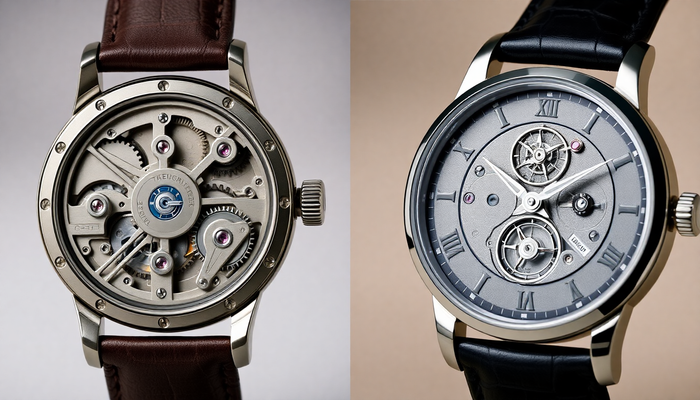
One of the most significant advantages of mechanical watches is the artistry involved in their creation. Master watchmakers spend years perfecting their craft, and each mechanical watch represents a culmination of skill, precision, and dedication. Many people appreciate the visible complexity of a mechanical movement, especially when viewing it through a display caseback. There's something deeply satisfying about owning a timepiece that represents human achievement and artistic expression.
Longevity and Durability
With proper care and regular maintenance, a mechanical watch can last for generations. Many mechanical watches from the early 20th century are still running perfectly today. Unlike quartz watches, which eventually need battery replacements and may have limited lifespans, a well-maintained mechanical watch can be passed down through families as a cherished heirloom.
Collectible Value
Mechanical watches, particularly those from prestigious manufacturers, often appreciate in value over time. Vintage mechanical watches have become highly sought-after collectibles, and limited-edition mechanical pieces can command impressive prices at auction. This investment potential is rarely seen with quartz watches.
Mechanical Watches: Disadvantages
Despite their advantages, mechanical watches do come with some notable drawbacks.
Higher Cost
Mechanical watches are significantly more expensive than their quartz counterparts. The intricate manufacturing process, the skilled labor involved, and the use of quality materials all contribute to higher prices. A decent mechanical watch will typically cost several times more than a comparable quartz watch.
Maintenance Requirements
Mechanical watches require regular maintenance to keep them running smoothly. They should be serviced every three to five years, which involves cleaning, lubricating, and adjusting the movement. These services can be costly and time-consuming, adding to the overall cost of ownership.
Accuracy Concerns
While mechanical watches are beautiful and durable, they're not as accurate as quartz watches. A well-regulated mechanical watch might lose or gain 10-20 seconds per day, which is acceptable for many people but frustrating for those who need precise timekeeping.
Quartz Watches: Advantages
Quartz watches have dominated the market for good reason, offering several practical advantages.
Affordability
Quartz watches are significantly cheaper to manufacture than mechanical watches, which means consumers benefit from lower prices. You can purchase a reliable, accurate quartz watch for a fraction of the cost of a mechanical timepiece. This affordability makes quality watches accessible to everyone.
Low Maintenance
Quartz watches require minimal maintenance. Beyond occasional battery replacements every few years, there's little you need to do to keep a quartz watch running. No winding, no servicing, no complex adjustments—just set it and forget it.
Superior Accuracy
Quartz watches are incredibly accurate, typically maintaining accuracy to within a few seconds per month. For people who rely on precise timekeeping, this accuracy is invaluable. You won't need to constantly adjust your watch to match the correct time.
Quartz Watches: Disadvantages
While quartz watches offer many practical advantages, they do have some limitations.
Battery Replacement Needed
Quartz watches require battery replacements every few years, which adds to the ongoing cost of ownership. While battery replacements are inexpensive, they do require periodic attention and maintenance visits.
Less Prestige
In the watch enthusiast community, quartz watches are often viewed as less prestigious than mechanical watches. They lack the craftsmanship and artistry associated with mechanical movements, which some people find less appealing.
Limited Lifespan
While quartz watches can last many years, they typically don't have the longevity of mechanical watches. Electronic components can fail, and the watch may eventually become unrepairable or uneconomical to fix.
Which Should You Buy?
The answer to this question depends entirely on your personal preferences, lifestyle, and priorities.
Choose Mechanical If:
You appreciate fine craftsmanship and are willing to invest in a quality timepiece. You enjoy the ritual of winding your watch and don't mind regular maintenance. You want a watch that will last for decades and potentially become a family heirloom. You're interested in watch collecting and value appreciation potential. You prefer the aesthetic appeal of visible mechanical movements.
Choose Quartz If:
You need a reliable, accurate watch for everyday wear without fuss. You're budget-conscious and want quality at an affordable price. You prefer low-maintenance accessories that require minimal attention. You need precise timekeeping for professional or personal reasons. You want a watch that will serve you well without requiring regular servicing.
Conclusion
Both mechanical and quartz watches have their place in the world of horology. Mechanical watches represent tradition, craftsmanship, and timeless elegance, while quartz watches offer practicality, accuracy, and affordability. The best choice depends on what matters most to you.
If you're ready to make your purchase, EX-STOCK Canada offers an excellent selection of both mechanical and quartz watches from trusted brands. With our AI-powered shopping experience, free shipping across Canada and the USA, and our generous 90-day returns policy, you can shop with confidence. Whether you choose a mechanical timepiece to treasure for generations or a reliable quartz watch for everyday wear, EX-STOCK Canada has the perfect watch waiting for you. Check out our Luxury Watch Collection here and I assure you that something will definitely catch your eye.

Deja un comentario